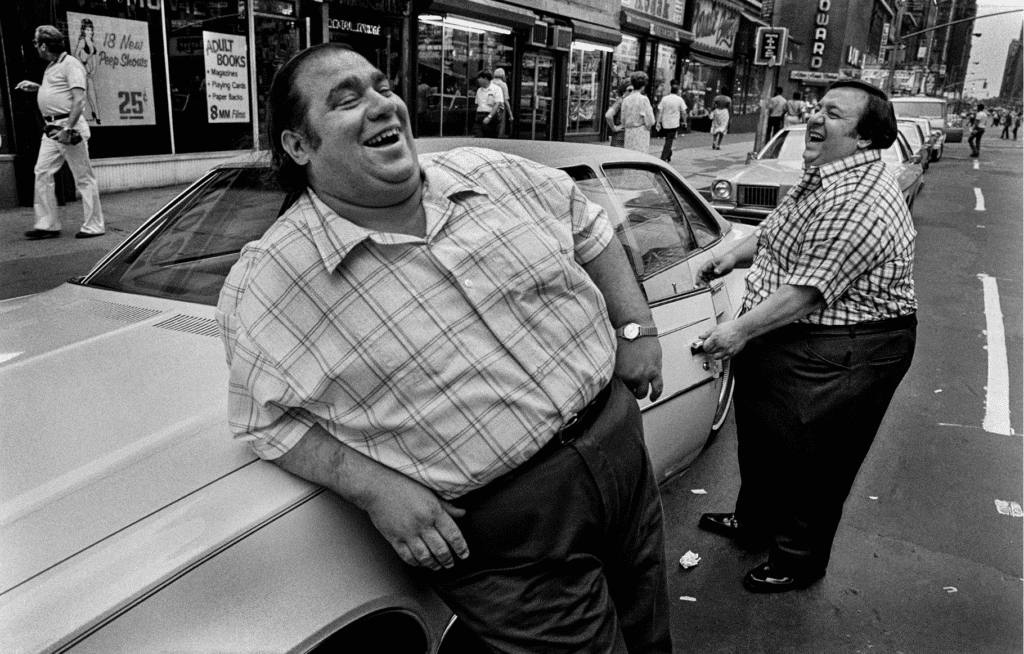
If there is one photographer who divides public opinion between genius and provocateur, it is Bruce Gilden. A member of Magnum Photos since 1998, Gilden has turned the sidewalk into a boxing ring, taking street photography to a level of physical intimacy never seen before. His style is not one of discreet observation, but a true visual collision.
The Aesthetics of Impact: The Flash as a Scalpel
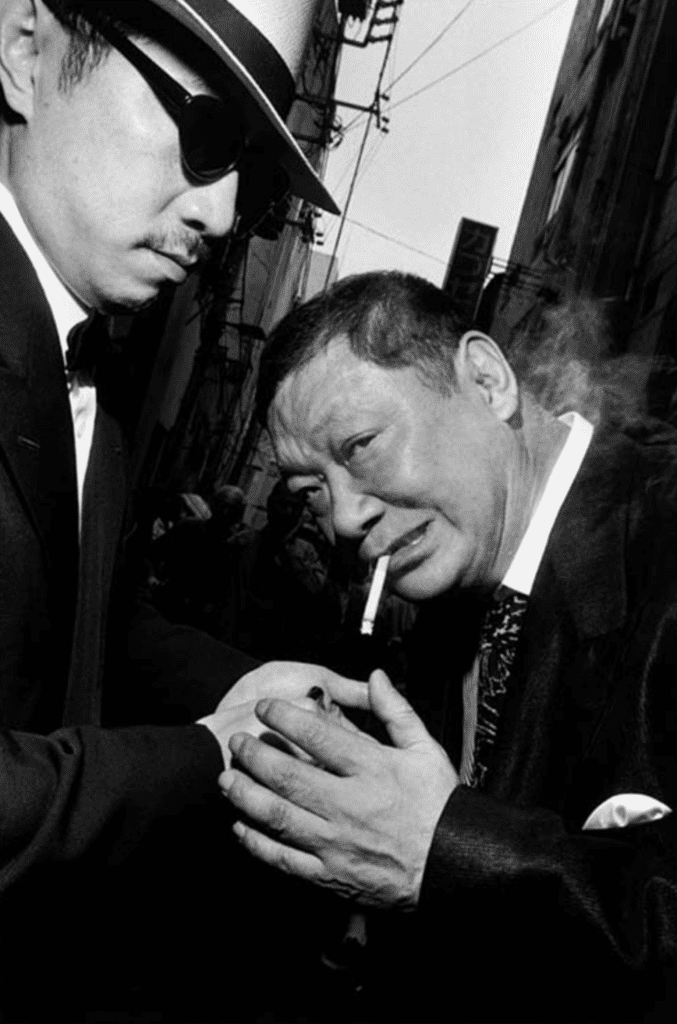
While most street photographers try to blend in, Gilden chooses to stand out. His signature style is the handheld flash, used not to illuminate a dark scene, but to isolate the subject from the chaos of the city, as if they were an actor under a spotlight.
His images, especially the historical ones taken in New York, do not seek conventional “beauty.” Gilden seeks character, wrinkles, grotesque expressions, and the nervous energy of the metropolis. The result is a raw, high-contrast aesthetic that transforms the passerby into a theatrical icon.
Technique and Setup: The “Gilden Method”
To create images with such dynamic energy, Gilden employs a technical setup that leaves no room for error and demands lightning-fast execution.
- Off-Camera Flash: Gilden holds the camera in his right hand and the flash in his left, raising it sideways and upward. This creates sharp shadows and a sculptural depth on the faces, making them stand out sharply from the background.
- Wide-angle Lens (28mm): Using a 28mm lens is essential. It forces the photographer to enter the subject’s personal space (often less than a meter away), creating an immersive perspective that places the viewer right on the sidewalk in front of the subject.
- Hyperfocal Distance and Zone Focusing: At such close range and with moving subjects, autofocus is useless. Gilden shoots in manual mode, setting a small aperture (f/8 or f/11) and pre-focusing the lens at a fixed distance (about 1–1.5 meters). Everything within that range will be in focus.
The reaction as a decisive moment
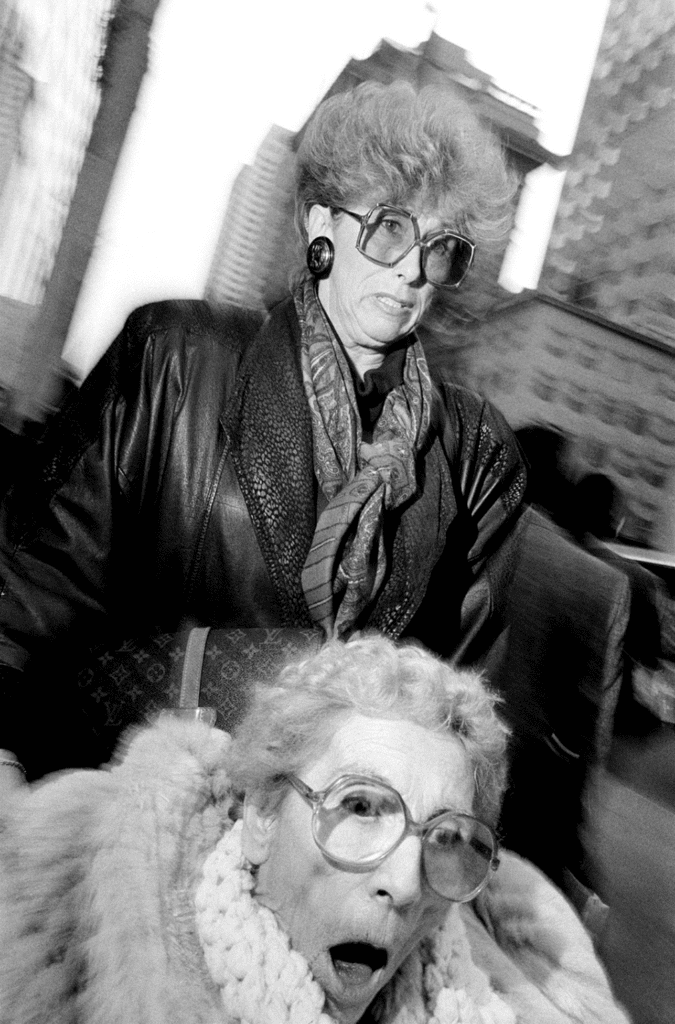
Unlike purists who snap photos surreptitiously, Gilden creates his images through interaction. The flash of the camera and his sudden appearance trigger an immediate reaction in his subjects: surprise, annoyance, curiosity, or defiance. It is precisely that split second of truth—when the social mask slips—that Gilden captures. It is not voyeurism; it is a photographic performance.
Tutorial: How to Take Street Photos with a Flash
Taking your flash out onto the street requires courage and flawless control of your camera. Here are the basic steps we cover during our hands-on workshops:
- Exposure Settings: Set the camera to manual mode to correctly expose the ambient light, or better yet, underexpose it by 1 stop to make the flash effect on the subject stand out more.
- Flash Synchronization: Use a sync cable to free the flash from the hot shoe. This allows you to control the direction of the light and avoid the “flat” effect of a front-facing flash.
- Flash Power: Do not use TTL. Set the flash to manual mode (e.g., 1/16 or 1/32 power) to ensure instant recharge times and complete consistency between shots.
- Attitude and Respect: Gilden’s technique is uncompromising. It teaches you to be quick and decisive. Once you’ve snapped the photo, don’t just walk away: a smile or a nod of thanks is an integral part of managing interactions on the street.
Want to master street photography in Rome?
If you want to learn how to master light, overcome your shyness, and find your own personal style, the courses at Daylight School are designed to push you out of your comfort zone. From hyperfocal techniques to the creative use of artificial light, transform the way you see the city.