There’s a romantic—though perhaps somewhat outdated—idea that views the photographer as an eternal lone wolf. Yet when two different perspectives meet on the same horizon, the result can be far more powerful than a single voice.
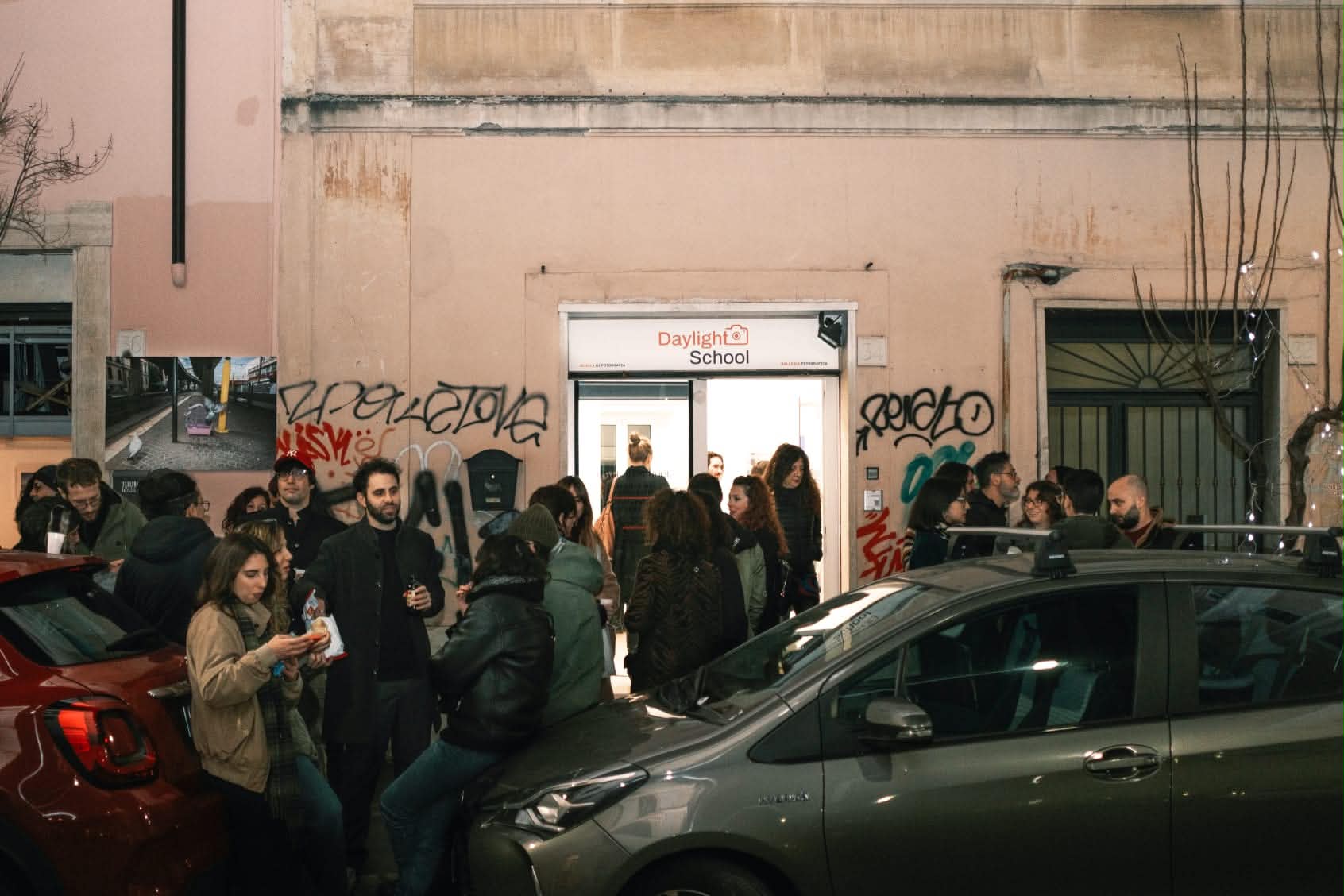
That’s exactly what happened with “Mareterno,” the project by Valeria Tofanelli and Lorenzo Catena that we hosted the other night at Daylight School.
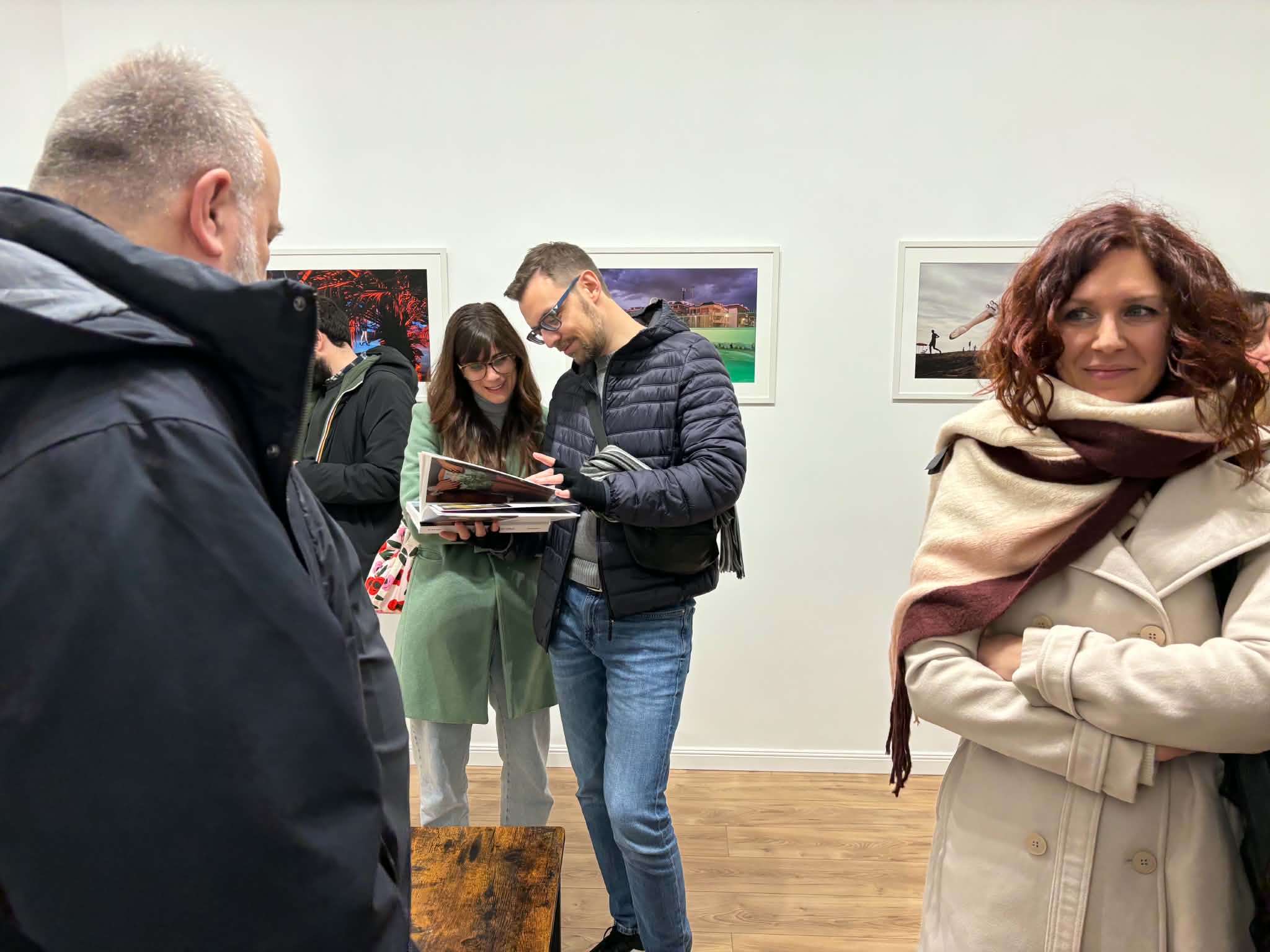
Anyone who lives in Rome knows what Ostia is, but in this book, Valeria and Lorenzo have brought out a different, almost ethereal side of it. “Mareterno” is a journey along the Roman coast experienced off-season, when the crowds of beachgoers disappear and what remains are the geometric shapes, the cool lights, and a metaphysical—and at times melancholic—atmosphere. Depicting this landscape as a collaborative effort, blending two styles and two sensibilities into a single visual flow, is a complex challenge that works perfectly in this book.
The Printed Book: Taking the Time to Look
Seeing our school fill up with curious people who stop to flip through the book and talk about it face-to-face with Lorenzo and Valeria is exactly why we opened this space. We’re used to devouring thousands of images a day on tiny screens, swiping from one photo to the next in fractions of a second.
But artistic photography takes time. Touching the paper, understanding the layout choices, discussing why one image ended up next to another in that specific narrative sequence—these are things you can’t learn from any online tutorial. The physical book restores photography’s weight and dignity, forcing you to slow down.
The Exhibition: Expanding the Visual Narrative
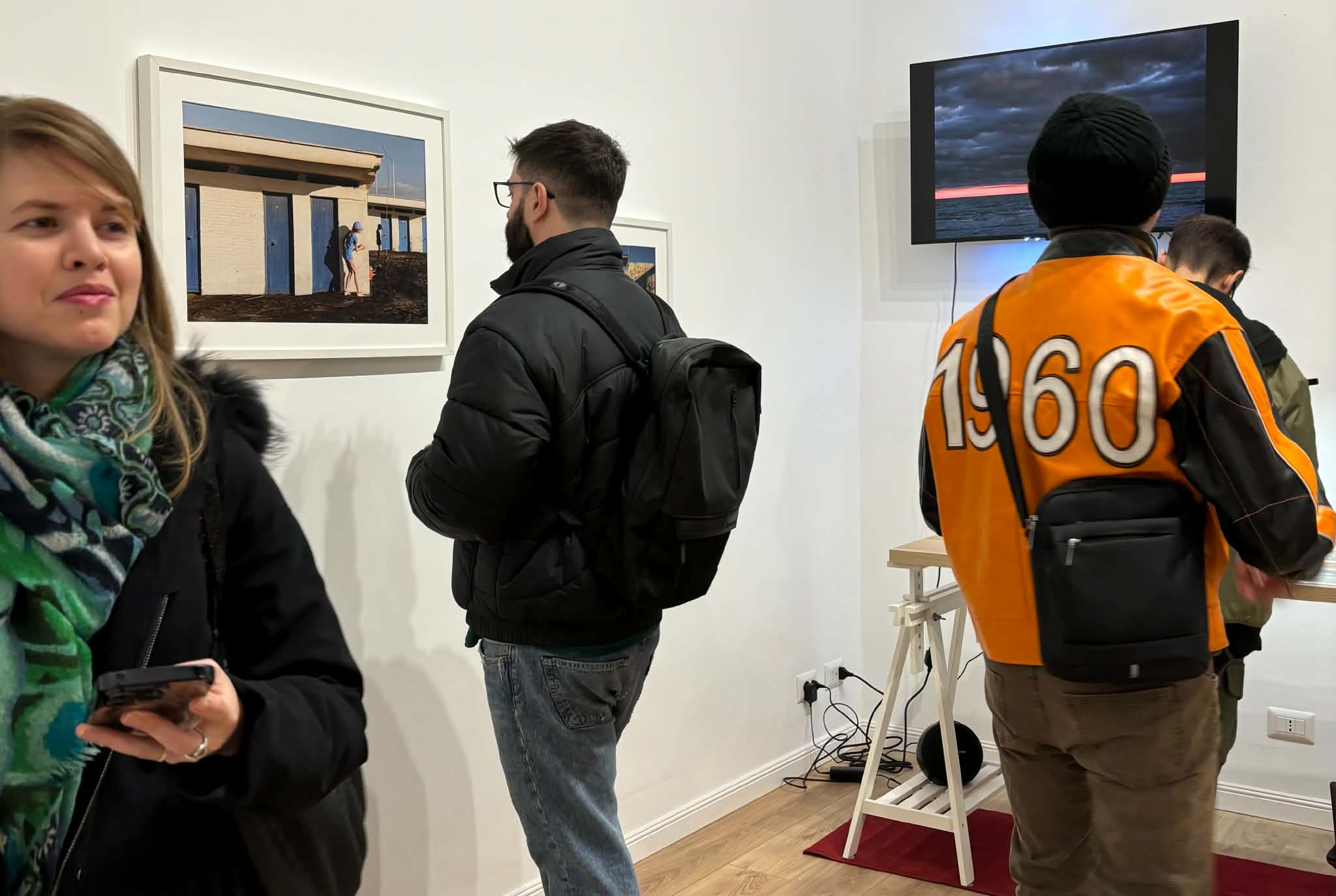
For the occasion, we didn’t just limit ourselves to placing a few books on a table. We transformed the Daylight School gallery into a physical extension of “Mareterno,” because we wanted visitors to be physically surrounded by that sense of anticipation and winter salt air that seeps from the pages.
The exhibition design, featuring fine art prints interspersed with video content, allowed visitors to interpret the work on multiple levels. It’s an approach we strive to maintain consistently in our events in Rome: to showcase not only isolated “beautiful photos,” but the framework of a solid project—the way the images interact with one another within the exhibition space and shift in meaning depending on how they’re arranged.
More than just a school—a gathering place
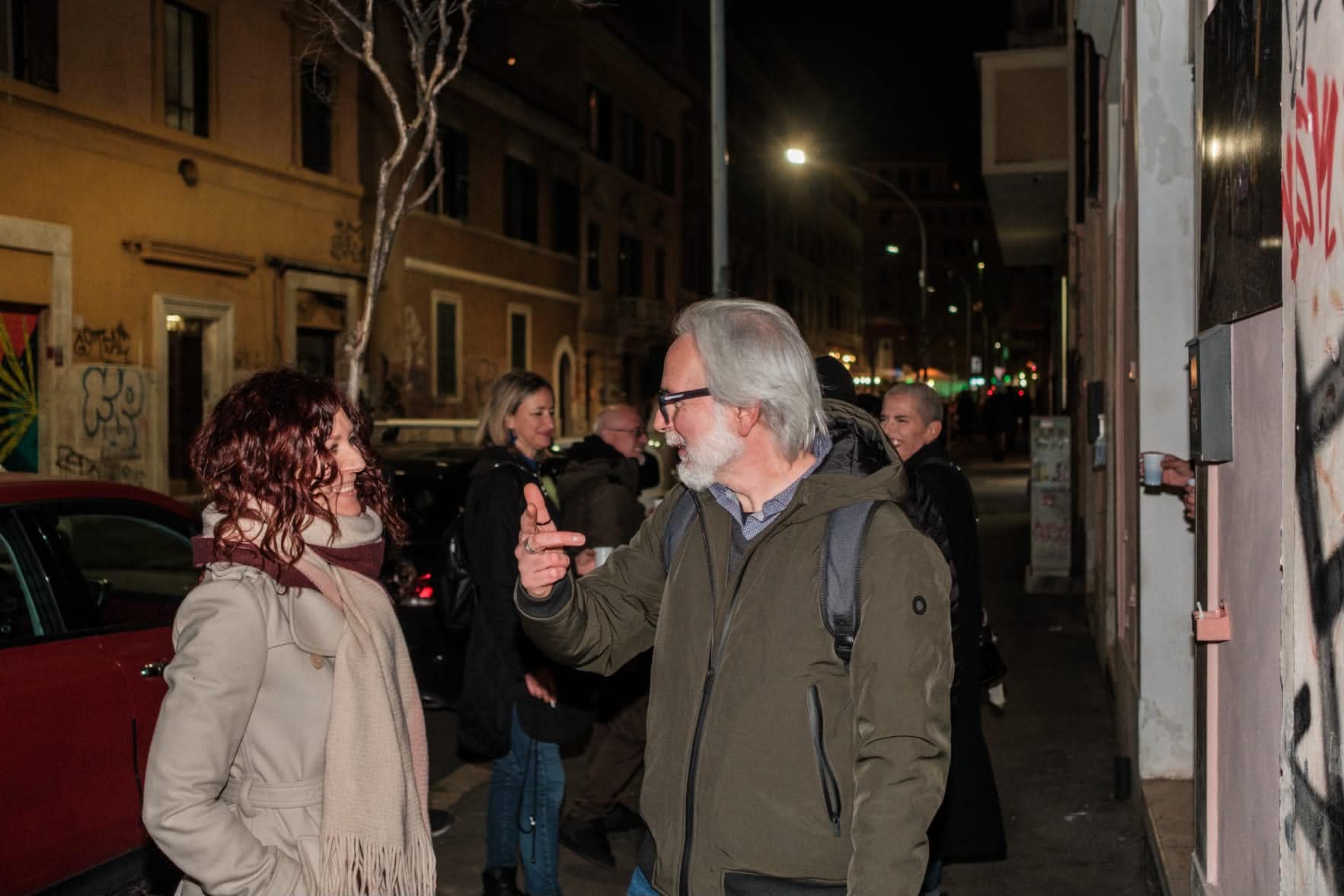
In the end, though, the best part of the evening was the casual conversation that arose by chance on the sidewalk outside the school, with the hustle and bustle of Pigneto in the background. Seeing industry professionals, students, and ordinary enthusiasts engage in direct discussion, dissecting and analyzing the work they had just seen, is the real victory.
A photography school shouldn’t just be a sterile classroom where people explain aperture and composition. It should be a gathering place, a workshop where visual culture is experienced and shared on an equal footing, without any pedestals. Evenings like this remind us that photography, even though it begins with a single person’s shot, desperately needs a community to stay alive.